
Obedience Comes Through Trusting God
And trust leads us to risk it all for him.

Obeying Christ is far more difficult—and far simpler—than we tend to think.
If you were to gather all the commands of Jesus across the Gospels and Acts, you would find more than a thousand direct instructions. Even when they’re grouped and simplified, they still number in the hundreds. They are worth studying, memorizing, and returning to often. But they were never meant to be carried by human effort alone. Without the Holy Spirit, even attempting to obey them becomes exhausting, and more than that, it shifts us into striving, which God never intended.
Striving: Where Obedience Goes Haywire
That’s where things begin to go wrong. Not in disobedience at first, maybe, but in the way we move into obedience. We start trying to manage it, organize it, build habits around it, and measure it. We reduce it to something we can track and improve. And in doing so, we subtly move away from the very thing obedience requires: dependence on God himself.
So this is not a call to take his commands lightly. It is a call to approach them rightly.
Even when we simplify his commands—love one another, pray, repent, believe, take up your cross, go and make disciples—we still find ourselves in the same place. It isn’t that we can’t remember these commands; it’s that we cannot keep them apart from him. When obedience becomes a system, it stops being relational. And when it stops being relational, it loses its life.
Mark Buchanan captures this tension well when he writes that we have failed if we help others understand God better, but our hearts are no more inclined to rest in him. Because if we don’t rest in him, we will never risk for him. (Holy Wild, Mark Buchanan)
And, make no mistake, Christ does ask us to risk: “Take up your cross and follow me.”
That command sits beneath all the others. It is not simply one instruction among many; it is the direction of a Christian’s life, whether in dangerous Nigeria or in the comfortable United States. This command reveals that obedience is not about mastering a list but about following Christ—wherever he leads.

The law, in both the Old and New Testaments, was never meant to produce obedience on its own. It was meant to reveal our need. It shows us what is right, but it cannot give us the power to live it. That power comes only through relationship, through the work of the Holy Spirit within us. What we cannot produce, God himself must form.
Forming Obedience Begins With Trust
This is why obedience begins with trust. Churches often try to reverse that order, requiring obedience before trust is firmly established. Christians try to obey to prove our love or to strengthen our trust. But obedience cannot sustain itself without trust, and trust cannot exist apart from knowing God’s character. If we do not believe he is good, we will hesitate when obedience becomes costly. If we do not believe he is faithful, we will resist when the path becomes unclear.
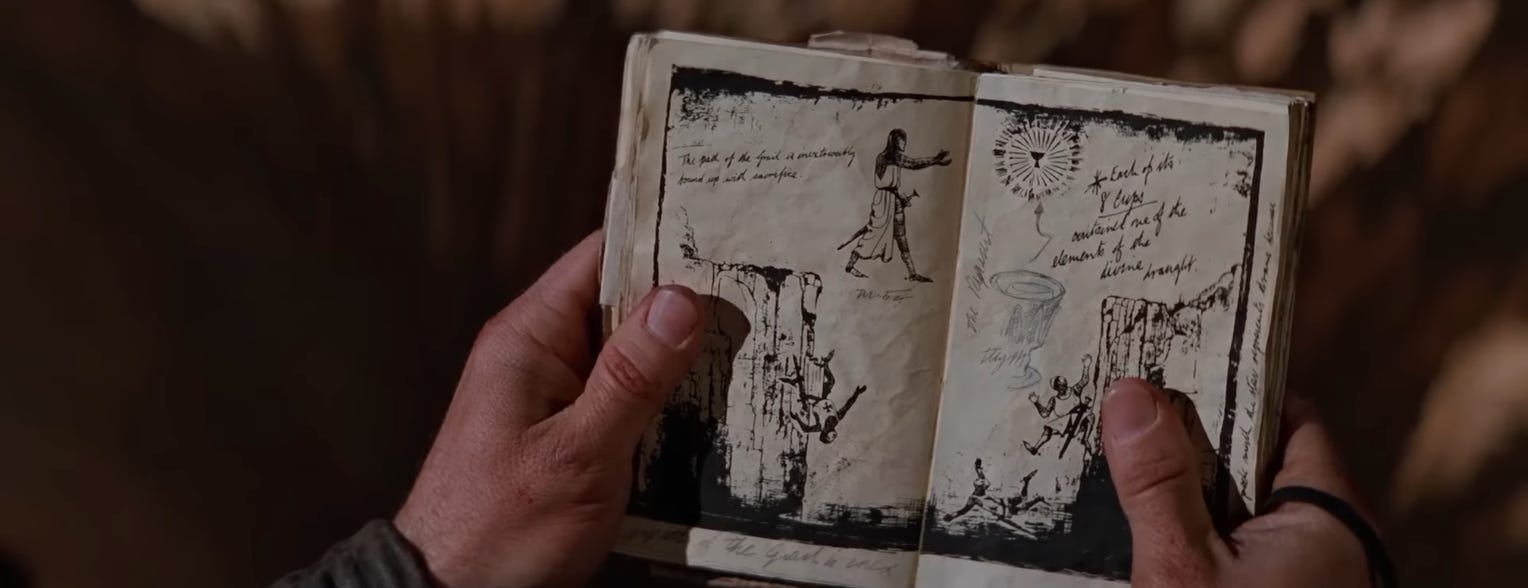
An illustration of this is the scene in the movie Indiana Jones & The Last Crusade. (Link here.) To set the scene, the hero of the story must find the Holy Grail to save his father’s life. Searching for the Holy Grail has been his father’s life's work, but now he’s been shot to motivate the hero to finish the quest. Time is running out. The hero runs a gauntlet of tests, guided by his father’s carefully documented diary. Each test he handles until he is faced with an uncrossable chasm and must cross. He has nothing but a hand-drawn guide showing other crusaders crossing an invisible bridge. His dad is gasping for breath, and he is urged to hurry. He has no choice.
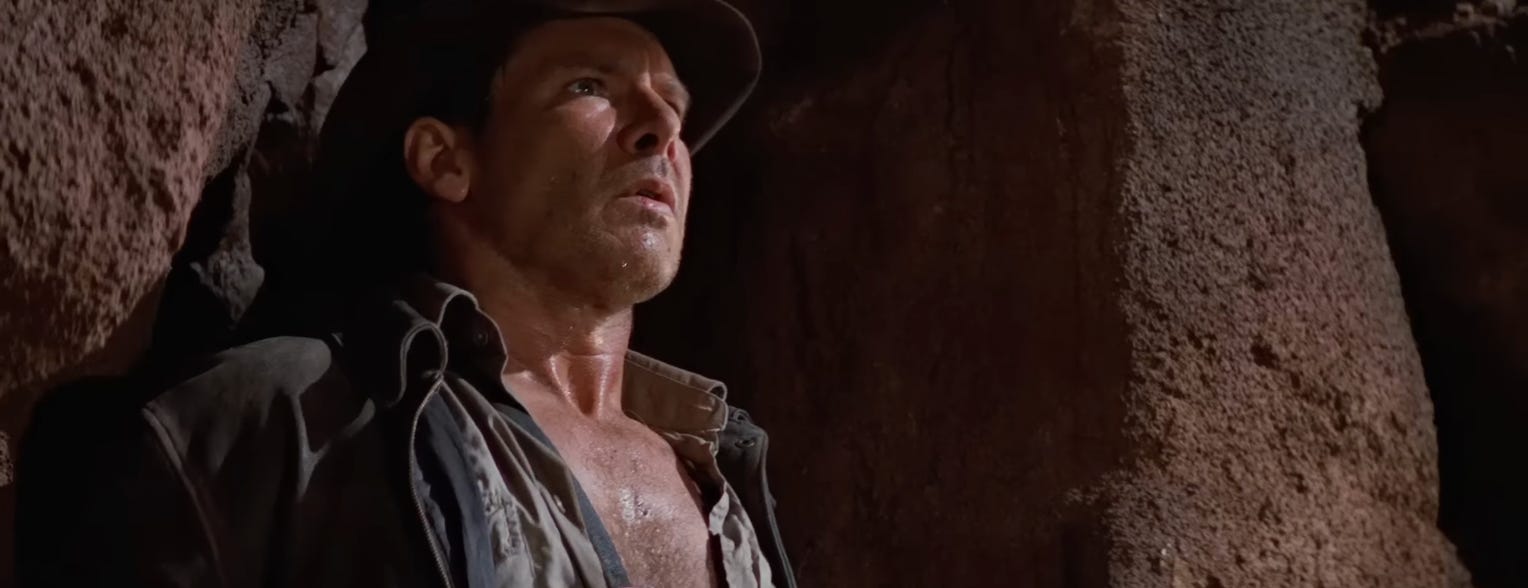
He sticks out his leg and leans all his weight forward on the foot over the chasm…and connects. With stone.
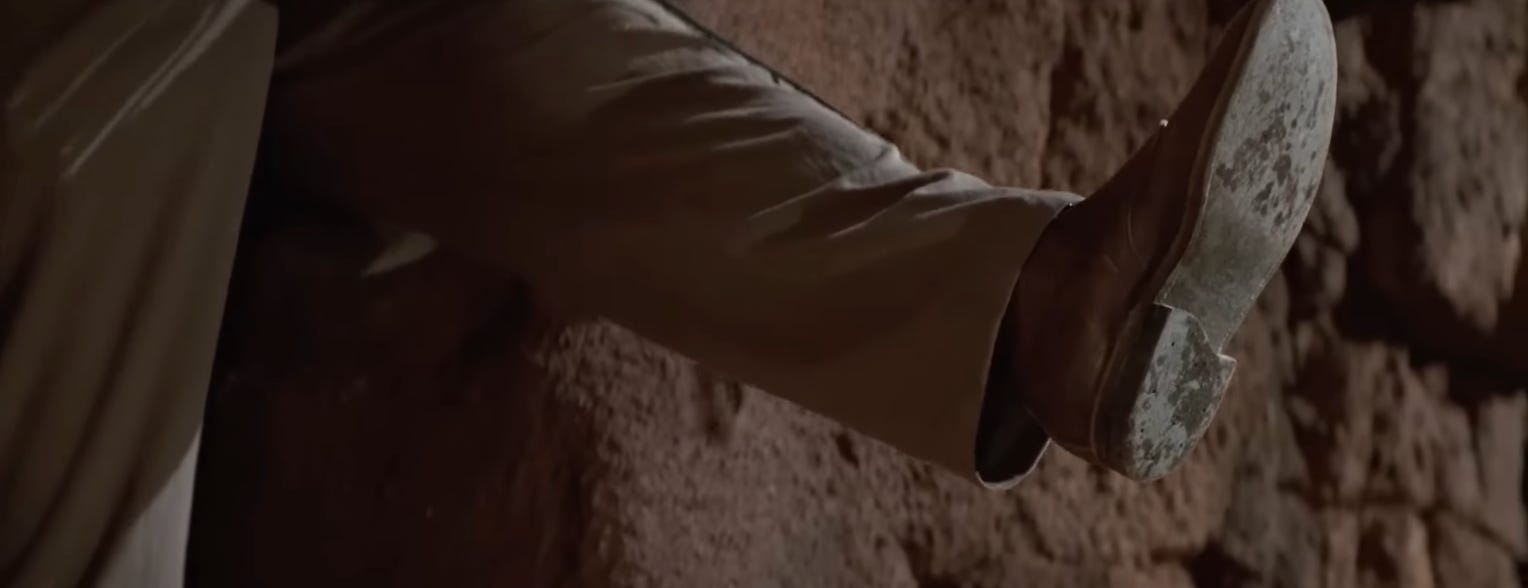
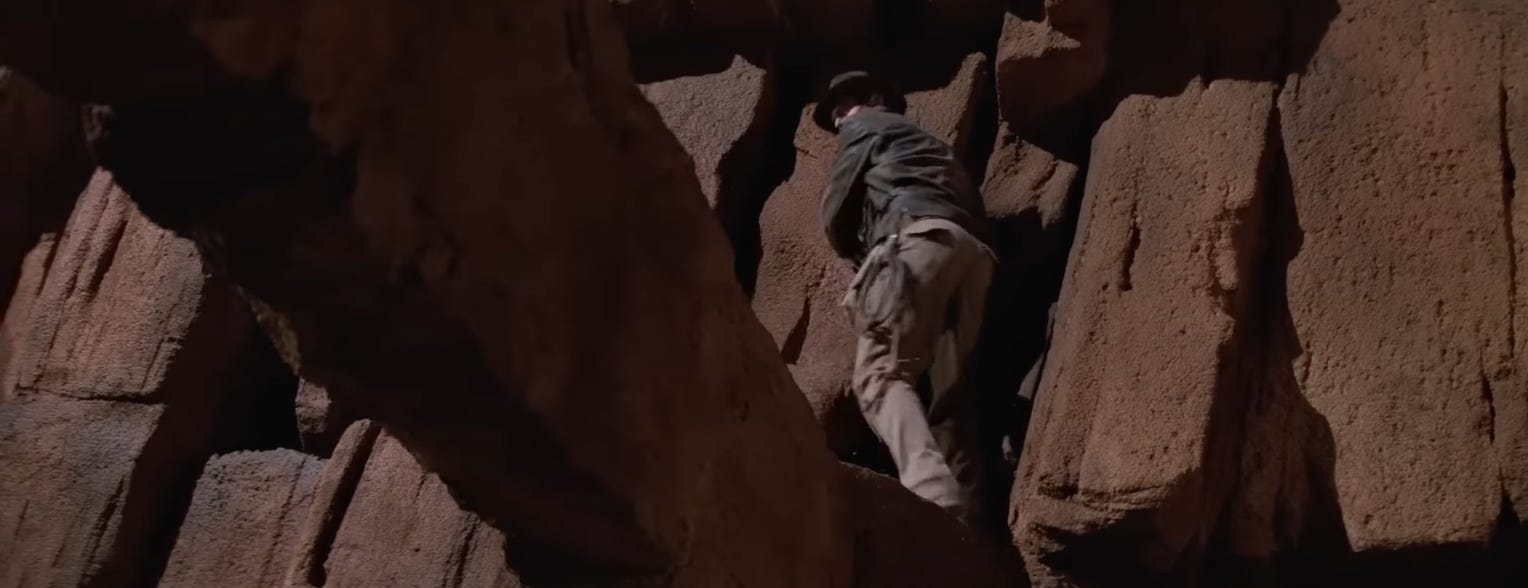
It’s been cut to be invisible against the opposite wall. This shows us visually what it’s like to trust our guides (the Holy Spirit and Scriptures) and prove they are reliable by testing them in smaller quests. Then, when the one we fear the most faces us, we step out into the chasm, and our foot meets the substance that has always been there, but we just couldn’t see it.
There comes a point in every believer’s life when obedience moves from theory into reality. It stops being about ideas and starts becoming about surrender. For me, I have seen how easy it is to stay occupied with what feels like smaller acts of obedience—studying Scripture, learning, building spiritual habits. All of these are good and necessary, but if I’m honest, there have been times I leaned into them to avoid the more radical call to die to myself.
We all sense this call is coming, on some level. That place where following Christ will actually require something from us, where it will cost comfort, control, or certainty. The point where it will ask us to trust him in ways we cannot manage or predict.
The Path We Are Called To Follow
Jesus knew this path well: scripture tells us he set his face toward Jerusalem. He was not moving toward convenience or safety, fame or fortune. He was moving toward the cross.
When he calls us to follow him, he is inviting us into that same direction—through death to self, through surrender, through the relinquishing of our right to our will, our ways, and our wants. And yet, this is where we hesitate. Not because we don’t understand the command, but because we don’t fully trust the One who gives it.
To obey him is to follow him…but to where?
Through death to self. Through absolute surrender. Through the cross.
“Take up your cross,” he says. “Follow me.”
We tend to read that at a distance, but Scripture does not soften it. “Do not be afraid of what you are about to suffer…Be faithful, even to the point of death, and I will give you life as your victor’s crown.” (Revelation 2:10)
That kind of obedience feels far beyond reach sometimes. We hope we will be one of the overcomers martyred for our faith in Revelations, but the truth is, we won’t even begin to approach this level of obedience if we haven’t first learned to trust him. And we will not trust him there unless we have come to love him. And we will not love him rightly unless we have come to know him as he truly is.
Faith, at its core, is resting in the character of God so completely that we trust him even when the path in front of us does not make sense, looks impossible, and might very well cost us everything. It is believing that he is good not only when life affirms it, but when life seems to contradict it. This kind of trust is not formed in a moment. It is formed over time, as we come to know him more deeply and see his faithfulness proven again and again, until trust becomes less of a decision and more of a settled posture of the heart.
I have come to believe that faithfulness is being full of faith that God will enable you to complete the large tasks that masquerade as small tasks, so that we are prepared for the impossible tasks that the God who started the work in us will bring to completion.
Faithfulness & Obedience Are Fruit
This is why obedience is never the starting point. Obedience is the fruit of a life that has come to know and trust God. Obedience cannot sustain itself apart from trust, and trust cannot exist apart from knowing him as he truly is.
The pattern I’ve been sharing holds:
To know him is to love him.
To love him is to trust him.
To trust him is to obey him.
To obey him is to follow him.
To follow him is to surrender—and in surrender, to walk in abundant life.
What we begin to see, over time, is that even this obedience is not something we generate on our own. It is something God forms within us. As Scripture says, it is God who works in us, both to will and to act according to his good pleasure. The very desire to obey and the ability to follow through are evidence of his work, not our strength.
Grace does not remove the cost of following Christ. It meets us in it. It enables what God calls for when “deep calls to deep.” It carries us where we would not have gone on our own and sustains us when the path is costly.
And in that place—where we finally release our grip and trust him fully—we begin to discover that what felt like death is the doorway to life.
Reflection Questions:
Have you believed that God would never call you to the impossible? How does it feel to know that God does indeed call you and I to do what will always require reliance on him? What does it mean to “set your face” to do what he’s calling? What does it mean to “take up your cross and follow him?”
If this reflection stirred something in you, you might find the KNOWN Devotional a helpful companion. It’s designed to guide us in recognizing how God reveals himself and how those revelations shape who we are becoming. You can find it on Amazon here: https://a.co/d/05OdrF5l
I’m Cathy Colver Garland, and I write about revelationship—how God reveals himself as he pursues us for relationship. You can subscribe here on Substack to continue exploring these reflections, or, if this content blesses you, leave a tip at: https://tiptopjar.com/CathyColverGarland.
Works Cited:
Buchanan, M. (2005). The holy wild: Trusting in the character of God. Multnomah Publishers.